I have devoted years analysing the math behind casino games, and one concept stands between a casual punt and a strategic session: the house edge https://bet-warts.eu/. It is not some conspiracy, nor is it a secret cost. It is a mathematical edge built into every game that guarantees the operator keeps operating while offering you a real chance at a win. When I first checked out Betwarts Casino, I saw beyond the eye-catching banners and welcome offers and concentrated on what the numbers actually mean for a player in the UK. The platform brings together slots, table games, and a live dealer lobby under one roof, but the basic maths is identical wherever you play. Comprehending the house edge changes how you choose games, how you determine your bets, and how you understand bonus terms. This guide takes you through the mechanics, the game‑specific differences, and the concrete steps you can take to make the edge work in your favour rather than against you.
How Does the House Edge and Why Is It There?
The house edge refers to the mathematical percentage of each wager that the casino expects to retain over the long run. If a game has a 2% house edge, the theoretical return to the player stands at 98 pence for every pound staked, averaged across thousands or millions of rounds. That does not mean you will lose exactly 2% in a single session; short‑term variance can deliver substantial wins or eliminate a bankroll quickly. The edge is present because casinos are businesses, not charities. They pay for operating costs, software licensing, staff, and payment processing while still making a profit. Without a built‑in advantage, no regulated operator would remain viable, and the UK market, where Betwarts Casino functions under a recognised gaming licence, would not offer the breadth of games it does today.
Every game contributes to the edge differently. European roulette, with its single zero, gives the house a 2.70% advantage on nearly all bets. American roulette, which adds a double zero, pushes that figure to 5.26%. Blackjack, when played with perfect basic strategy, can reduce the edge to around 0.50% in favourable rule sets. Slots cover a wide range, often between 2% and 10%, depending on the title and the return‑to‑player setting picked by the operator. I have always viewed it useful to think of the house edge as the price of entertainment. The key is understanding what you are paying, so you can decide whether a game’s volatility and potential payouts justify the cost. At Betwarts Casino, the game library is large enough that you can actively hunt for lower‑edge options if you know where to look.
Understanding the edge also safeguards you from common misconceptions. No bet is “due” to win because the edge is a long‑term average, not a short‑term pendulum. The random number generators powering the slots and digital table games at Betwarts Casino have no memory. Each spin or hand stands alone, and the house edge simply depicts the slope of the landscape over time, not the outcome of your next click. I recommend viewing the edge as a budgeting tool rather than a prophecy.
Comprehending the House Edge in Slots
Slots are the most popular category at Betwarts Casino, and they also present the widest house edge spectrum. Every slot uses a random number generator that dictates each spin’s outcome independently. The game’s maths model dictates the hit frequency, the distribution of payouts, and the contribution to any progressive jackpot. The house edge is baked into the paytable and the symbol weighting. A cherry can land frequently but award little, while the wild multiplier occurs rarely and delivers the big wins. The gap between the frequency and the payout generates the edge.
I consider three factors that directly influence the effective house edge of a slot session. First, the published RTP. Many UK‑facing casinos, including Betwarts Casino, feature slots in the 94% to 97% range. I always look at the game information screen because the same title can be set at different RTP settings depending on the operator. Second, the bonus buy feature, if available, lets you purchase direct entry into the free spins round. While this skips the base game grind, the cost of the buy is usually set so that the house edge is unchanged, though the volatility increases. Third, progressive jackpot contributions. A slot linked to a network jackpot may deduct 1% to 2% of each stake to fund the prize pool, effectively boosting the base game house edge. I consider whether the jackpot has grown enough to offset that deduction before I wager.
When I looked at the slot lobby at Betwarts Casino, I saw a healthy mix of classic fruit machines, Megaways titles, and branded video slots. The house edge on a classic three‑reel game can sometimes be larger than on a feature‑rich video slot because the latter often features free spin rounds that enhance the overall RTP. I routinely playing a few dozen spins in demo mode first, where available, to assess the rhythm of the game. That small step has saved me from investing real money into slots whose volatility and edge did not meet my expectations.
- Examine the paytable or game rules for the exact RTP percentage before you wager.
- Be cautious with progressive slots; the base game RTP may be substantially lower than the advertised total RTP.
- Bonus buy features compress variance but do not remove the house edge.
- Classic slots often have more basic maths models, which can mean a higher edge than modern video slots.
The function of Player Return (RTP) and Fluctuation
RTP and house edge are opposite sides of the same coin. If a game has a 97% RTP, the house edge is 3%. I think it is beneficial to think in RTP terms when judging slots because providers nearly always publish that figure, whereas table game players often speak in house edge percentages. What RTP does not tell you is how that return is allocated. That is where volatility, or variance, enters the picture. A high‑volatility slot with a 96% RTP can swallow twenty consecutive spins without a win, then deliver a bonus round that pays 200 times your stake. A low‑volatility game with the same RTP will generate smaller, more frequent wins, maintaining your balance steadier.
At Betwarts Casino, I have noticed slots marked with volatility ratings, though not every title contains that information. When it is missing, I look at the paytable structure. Games where the top symbol pays a substantial multiple of the line bet, but the smaller wins are modest, are usually high‑volatility. Titles with numerous stacked symbols and frequent feature triggers typically fall into the lower end. Grasping this pairing of RTP and volatility is essential because two games with identical house edges can seem completely different over a hundred‑spin session. I always adjust volatility to my session budget. If I have £50 and want an hour of entertainment, I choose a low‑volatility slot; if I am going after a big hit and accept the risk of a fast bust, I opt for high volatility.
One practical tip I use is to regard RTP as a compass, not a guarantee. A 98% RTP slot does not mean you will obtain £98 back from a £100 deposit after an hour. That figure is attained over millions of spins. In the short term, the house edge can feel invisible or brutally obvious, and volatility dictates which face you see. By integrating RTP awareness with a clear volatility preference, you can build a session plan that matches your temperament and bankroll size, something I have done repeatedly when exploring the slot catalogue at Betwarts Casino.
Controlling Your Bankroll with the House Edge in Mind
Fund management is the practical application of house edge knowledge. I establish a session budget before I log into Betwarts Casino and break it into units that reflect the volatility of the games I intend to play. For a low‑edge blackjack session, I might use units of 1% of my bankroll, accounting for the natural swings without endangering rapid ruin. For a high‑volatility slot, I lower the unit size to 0.5% or less, accepting that I will probably hit a dry spell before a bonus round kicks in. The house edge reveals the long‑term cost; my bet sizing determines how long I can remain in the game before that cost occurs.
I also utilize the responsible gambling tools that Betwarts Casino offers. Deposit limits, session time reminders, and reality checks are not just compliance boxes; they are protections against the psychological trap of chasing losses. When the house edge is quietly eroding a balance, the temptation to boost stakes to recover losses can be intense. I have realized to identify that urge and step away. The edge does not alter because you are down; it stays constant, so increasing twofold your bet size simply multiplies the theoretical loss per hour. A structured approach keeps the entertainment value intact and stops a cold statistical reality from becoming a personal financial problem.
Finally, I treat the house edge as a choosing criterion when constructing a session plan. I dedicate the majority of my bankroll to games with a documented low edge, such as blackjack, baccarat, and high‑RTP slots, and set aside a small part for higher‑edge games that I play just for the experience. This tiered approach has served me well across many sessions at Betwarts Casino, enabling me appreciate the breadth of the library while keeping the mathematical damage within predictable bounds.
Grasping the house edge converts you from a passive spinner into an knowledgeable player who can assess risk, entertainment value, and bonus mechanics with clarity. The games at Betwarts Casino range across the full edge spectrum, from razor‑thin blackjack tables to high‑octane progressive slots. Your task is not to erase the edge—that is impossible—but to pick where and how you pay it. Commence with the low‑edge games to build confidence, study the bonus terms as carefully as you read a paytable, and set firm session limits before you deposit. Once you absorb these habits, the house edge becomes a reasonable cost rather than an hidden drain, and every session can be approached with calm, calculated intention.

The way House Edge Varies Across Game Categories
While I scan the lobby at Betwarts Casino, I mentally group the games into three primary buckets: slots, digital table games, and live dealer tables. Each category displays a distinct house edge profile, determined by game mechanics, player decisions, and the speed of play. Slots typically have to have the broadest range, with some classic three‑reel titles being above 5% and modern video slots occasionally dipping below 3%. Table games, notably blackjack and baccarat, cluster at the low end of the spectrum, frequently below 1.5% when optimal strategy is applied. Live dealer games reflect their digital counterparts but introduce subtle differences in pace and side‑bet availability that can move the effective edge upward if you are not careful.
Slots and Instant win Games
Slots are the heart of any online casino, and Betwarts Casino is no exception. Their house edge is reflected through the return‑to‑player percentage, which is the inverse of the edge. A slot with a 96% RTP carries a 4% house edge. I have noticed that the RTP is seldom displayed on the game thumbnail; you often need to open the paytable or check the provider’s website. Progressive jackpot slots deserve special attention because a portion of every stake feeds the jackpot pool, which can push the base game RTP below 90% until the top prize grows large enough to compensate. Instant‑win scratch cards and arcade‑style games can have edges exceeding 10%, so I regard them as occasional diversions rather than core bankroll plays.
Digital Table Games
The digital versions of blackjack, roulette, and baccarat at Betwarts Casino let you to play at your own pace. The house edge here is mostly fixed by the rules. A single‑zero roulette wheel always gives the house 2.70%, while the American double‑zero variant doubles that to 5.26%. Blackjack edges rely on the specific rule set: whether the dealer stands on soft 17, whether doubling after splitting is allowed, and the number of decks in use. I have come across digital blackjack tables with edges as low as 0.40% when the rules are generous. Baccarat is wonderfully simple; the banker bet carries a 1.06% edge after commission, making it one of the most efficient bets in the entire casino.
Real-time Dealer Games
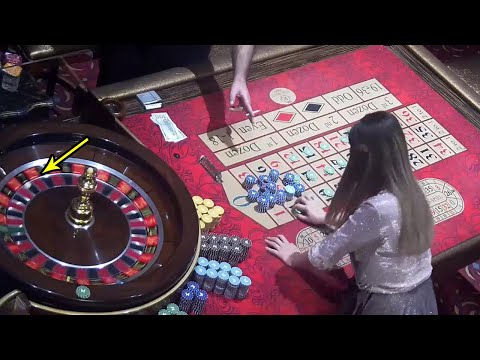
Real-time dealer tables, like the one I experienced at Betwarts Casino, broadcast real croupiers to your screen. The inherent house edge on the main bets—red or black in roulette, player or banker in baccarat—equals the digital versions. The difference comes from the pace. A live blackjack table processes around 60 to 80 hands per hour, far slower than a digital table that can handle 200 hands in the same time. Slower play reduces the total theoretical loss per hour, even if the percentage edge is identical. However, live game shows and side bets, such as Perfect Pairs or 21+3, often have edges above 5%, so I steer clear of them unless I am deliberately taking a shot at a large multiplier.
Classic Table Games: How Skill Combines with the Structural Advantage
Table games constitute the most clear arena for the house edge because the rules are disclosed and the probabilities are set. At Betwarts Casino, I located multiple variants of blackjack, roulette, baccarat, and casino poker. The edge in these games is not a puzzle; it comes directly from the payout ratios in relation to the true odds. In European roulette, a straight‑up number pays 35 to 1, but the true odds are 36 to 1 because of the single zero. That one‑unit shortfall creates the 2.70% edge. No amount of strategy can affect that on a roulette wheel, which is why I consider it as a pure chance game with a fixed cost.
Black Jack and Player Choices
Blackjack is the star because your moves directly reduce the house edge. The initial edge in a typical six‑deck game where the dealer stands on soft 17 is around 0.60% before strategy. By following basic strategy—a chart that determines the mathematically optimal move for every player hand against every dealer upcard—you can reduce that edge down to roughly 0.50% or lower. I have learned the key plays: always split aces and eights, never split tens, stand on hard 17 and above, and double down on 11 against most dealer upcards. At Betwarts Casino, the digital blackjack tables often show the specific rules, and I advise reading them carefully because a rule like “dealer hits soft 17” adds about 0.20% to the house edge. Even a single unfavorable rule can reverse the benefit of perfect strategy.
Roulette and Baccarat
Roulette’s house edge is fixed once the wheel is chosen. I always choose European or French roulette over American roulette at Betwarts Casino because the single zero cuts the edge in half. French roulette with the “la partage” rule, where you get back half your even‑money bet when the zero lands, lowers the edge on those bets to 1.35%. Baccarat is even easier. The banker bet has a 1.06% edge after the standard 5% commission, the player bet sits at 1.24%, and the tie bet is a sucker’s wager at over 14%. I stay with banker or player and skip the side bets entirely.
- Single-zero roulette (one zero): 2.70% house edge on most bets.
- Double-zero roulette (double zero): 5.26% casino advantage.
- Blackjack with player-friendly rules and optimal basic strategy: as low as 0.40%–0.50%.
- Baccarat banker bet: 1.06% after the fee.
- Poker-style casino games like Caribbean Stud Poker: usually 5% or more, based on the paytable.
Live Casino Games and the Social Aspect
The live dealer area at Betwarts Casino brings a different rhythm to the house edge equation. The statistical advantage on the primary wagers remains unchanged to the digital versions, but the tempo slows considerably. A real-time blackjack table with seven seats and a human dealer might deal 50 to 70 hands per hour, whereas a digital table can easily exceed 200 hands. This more leisurely speed means your expected loss per hour, calculated as average bet size combined with house edge times hands per hour, decreases significantly. I have leveraged this to my advantage when I want to appreciate the social atmosphere without exhausting my bankroll at digital speed.
Live dealer games also introduce side bets and game‑show formats that carry their own, often steeper, edges. The Lightning Roulette variant, for example, offers standard odds on straight‑up numbers but decreases payouts on other bets to support random multipliers. The overall house edge remains close to standard roulette, but the changed paytable changes the volatility. Game shows like Dream Catcher or Monopoly Live include segments with house edges varying from around 3% on the most frequent numbers to over 20% on the rarest multipliers. I treat these as entertainment products with a specific price tag. At Betwarts Casino, the live lobby is comprehensive, and I ensure of examining the game rules and the theoretical RTP, which reputable providers present in the information menu.
One detail that often goes unnoticed is the effect of connection stability and decision time limits. Live tables impose a short window to put bets or make decisions. Rushing can result in mistakes, especially in blackjack, where a incorrectly played hand raises the effective house edge. I always guarantee a stable internet connection and steer clear of playing live dealer games when I am unfocused. The house edge is already working quietly in the background; adding unforced errors only magnifies its effect.
The way Bonuses and Promotions Interact with the House Edge
Bonuses can temporarily shift the effective house edge in your favour, but only if you handle the terms with precision. A typical welcome offer at Betwarts Casino might match your first deposit and add free spins, but the real mathematics resides in the wagering requirement. If you claim a £100 bonus with a 35x wagering requirement, you must stake £3,500 before withdrawing any bonus‑derived winnings. During that playthrough, the house edge grinds away at your balance. I compute the expected loss by multiplying the total wagering requirement by the house edge of the games I intend to play. If I clear the requirement on a slot with a 4% edge, the expected cost is £140, which exceeds the bonus value. That turns the offer mathematically negative unless I can find a low‑edge game that contributes fully.
Game Weighting and Restricted Titles
Not all games add equally to wagering requirements. At Betwarts Casino, as at most UK‑facing operators, slots usually contribute 100%, but table games and live dealer games often contribute only 10% or 20%, or are excluded entirely. I always read the bonus terms to identify which titles count and at what rate. Some high‑RTP slots may be restricted from bonus play altogether, precisely because they would allow a player to clear the requirement with a lower expected loss. I have encountered situations where the only eligible games carried edges above 5%, making the bonus a poor proposition. The smart move is to view the bonus as a tool to extend play on games you already enjoy, not as a guaranteed profit centre.
- Review the wagering requirement multiplier and the time limit to complete it.
- Identify the game weighting percentages; slots typically contribute 100%, while blackjack may contribute 10% or zero.
- Search for maximum bet restrictions during bonus play, often capped at £5 per spin in the UK.
- Compute the expected loss using the house edge of the eligible games before you opt in.
FAQ
What is a good house edge for a casino game?
A house edge beneath 1.5% is usually considered excellent. Blackjack with favourable rules and perfect basic strategy can dip to around 0.50%, while baccarat’s banker bet sits at 1.06%. European roulette at 2.70% is acceptable for a pure chance game. Slots with an RTP over 97% (house edge under 3%) are strong choices. Anything exceeding 5% should be treated as pure entertainment with a greater expected cost per session.
Can the house edge mean I cannot win?
No, the house edge indicates the long‑term average across millions of rounds. In a single session, variance can produce substantial wins. The edge simply means that over time, the casino has a statistical advantage. Short‑term luck can and does override the edge regularly, which is why players depart with profits. The key is recognizing that the longer you play, the more probable the edge is to show in your results.
How do I find the RTP of a slot at Betwarts Casino?
Open the game and find an information icon, usually an “i” or a menu button. The paytable or help section often displays the theoretical RTP as a percentage. If it is not shown, you can visit the game developer’s official website, where RTP ranges are usually published. Some titles at Betwarts Casino may also present the RTP on the loading screen or in the game rules pop‑up.
Do bonuses reduce the house edge?
Bonuses can temporarily decrease the effective cost of play if the wagering requirement is low and the eligible games have a beneficial house edge. However, most bonuses carry terms that make sure the mathematical advantage remains with the casino over the full playthrough. Always determine the expected loss based on the total wagering requirement and the edge of the games you will play before taking a bonus.
Are the house edge the same in live dealer games as in digital table games?
The house edge on main bets is identical, but the effective hourly cost can be less in live dealer games because the pace is less rapid. A live blackjack table deals far fewer hands per hour than a digital version, reducing the total theoretical loss over the same period. Side bets and game‑show formats in the live lobby often carry higher edges, so it pays to focus on the standard wagers.
Leave a Reply